Wells Fargo · Community banking · content strategy
Achieving goals, one conversation at a time
Wells Fargo Conversations gave a banker and a customer new to banking one screen to work through a financial goal together, side by side, with privacy built into the screen itself.
Content Strategist, Digital Branch and ATM. Designing a conversational proof of concept with a fellow content strategist and a UX design manager. Aug 2017 to Aug 2018.
Problem
Many customers were new to banking, often without savings, some coming from payday loans and check-cashing services. Reaching a financial goal meant complex decisions, and bankers needed a clear, consistent way to explain them.
Move
Scripted, goal-oriented dialogue flows on a screen the banker and customer viewed side by side, reviewed with Risk, Compliance, and Operations, with privacy guardrails built into the screen.
Outcome
Piloted in at least one branch, where I watched a banker guide customers who had agreed to let us listen in.
The context
I joined Wells Fargo’s Digital Branch & ATM team as a content strategist in August 2017. The bank was working to reimagine and simplify banking, and to rebuild trust.
Act 1:The conversation
Wells Fargo Conversations was a proof of concept built on scripted, goal-oriented dialogue flows. I designed and tested those flows, simplified so a retail banker could explain the options clearly to a customer working toward a goal. The structure kept the conversation on the customer’s goal and what it would take to reach it.
The flows went through Risk, Compliance, and Operations. They had to meet regulatory requirements and still read as a clear, empathetic conversation.
Act 2:A shared screen
Letting a customer see a banker’s screen was typically not done at all. The UI was a specially constructed view shared by the banker and the customer sitting side by side.
In addition to internal permissions, each customer had to agree to take part. The screen the customer saw was built for just this activity.
Act 3:In the branch
The concept was piloted in at least one branch. I was issued a badge with my name on it, and with a fellow content strategist and a UX design manager, I watched a banker lead customers through the conversation. They had agreed to let us listen in.
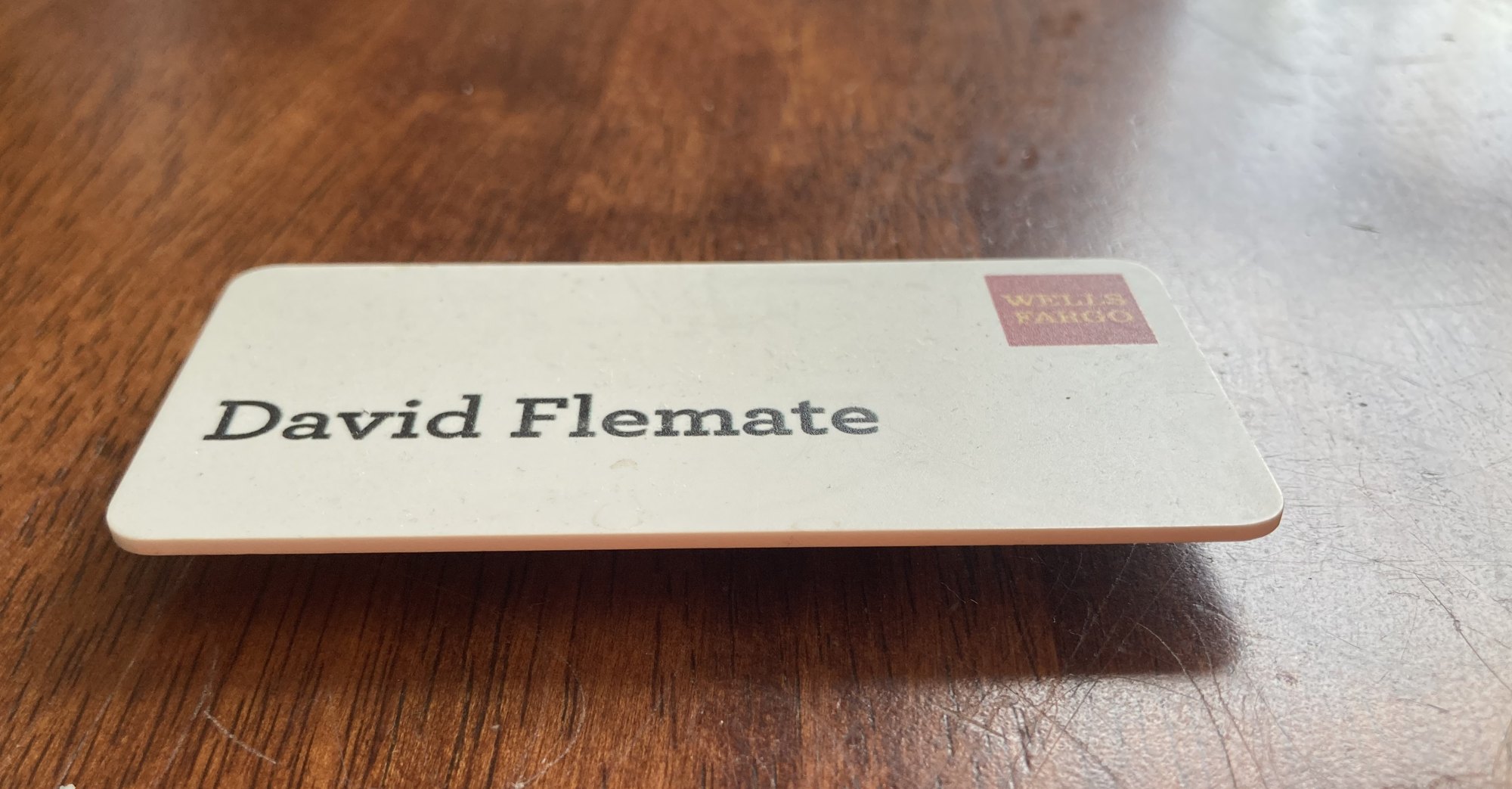
It was a novel setup for the bank. No numbers from the pilot are on record. It ran with real customers in a real branch, with their privacy protected by design.
PostScript
Every goal had a next step
Pick a goal. The banker asked one question, and each answer led to a step the customer could take.
If I were leading this kind of service design work today, I would carry the conversation past the branch visit. The goal and plan set with the banker would become something the customer could track in the mobile app or by encrypted text, whichever they chose. Setting a goal and a plan is a common offering now, much like a savings goal with automated deposits and transfers.
Reminders and success messages would keep it moving. If no progress showed up, a warning would follow, and possibly a call or letter from the banker to re-engage. Questions or a stuck point would go straight back to the same banker.
It was my second time at Wells Fargo, after a short consulting stint in its Internet Services Group in 2007 and 2008.
Walking someone through a big decision?
Let’s make the next step clear.