Autodesk · Fusion · content design
Graduating Fusion from incubation
Fusion started as an incubator product with its own look and its own rules. This is how it moved into the standard product center, without losing the people it was built for.
Principal Content Designer, UX Design team. Shaping the product center template with the UX designer and the product marketing team. Jul 2019 to Feb 2024.
Problem
Fusion ran one-off pages with fewer guardrails than AutoCAD, Revit, or Maya. They were hard to update, test, or roll out to new markets.
Move
Rebuild the product center on pattern library components, with features organized by role and a clear path from free personal use to paid plans.
Outcome
After the migration, trial starts rose 20% and conversion improved 8%. Requested changes also shipped faster.
The context
In 2019, Fusion 360 was still in incubation and only available in some markets. That status let it run one-off experiments with fewer guardrails than AutoCAD, Revit, or Maya.
The freedom came at a cost. Fusion’s pages had a fragmented look of their own, and every change was a custom job.
Act 1:Into the product center
After a successful incubation, and a new name, Autodesk Fusion, the product moved to the standard product center format between 2022 and 2023. The new pages were built on pattern library components designed for performance, A/B testing, and scaling across markets.
I helped shape the template that publishing teams filled in. It set the order of panels, which were required or optional, and character limits that left room for translation.
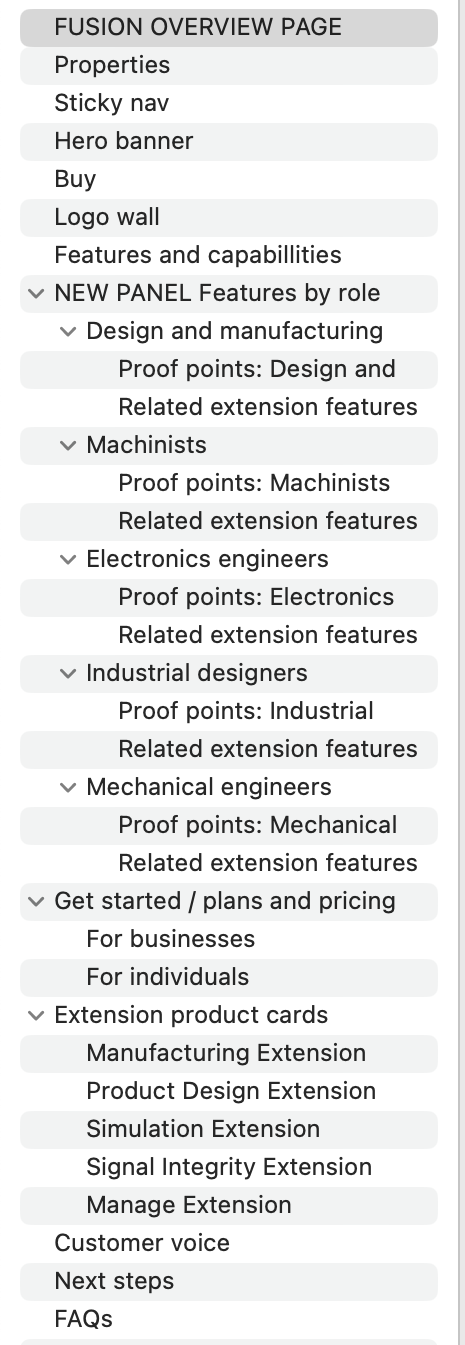
The template added a new panel, features by role. Machinists, electronics engineers, industrial designers, and mechanical engineers each got their own proof points and the extensions that mattered to them.
Act 2:From hobbyist to professional
Fusion’s audience ranged from hobbyists using it free for personal projects to professionals on paid plans. I worked with the UX designer and the product marketing team so each of them found a path.
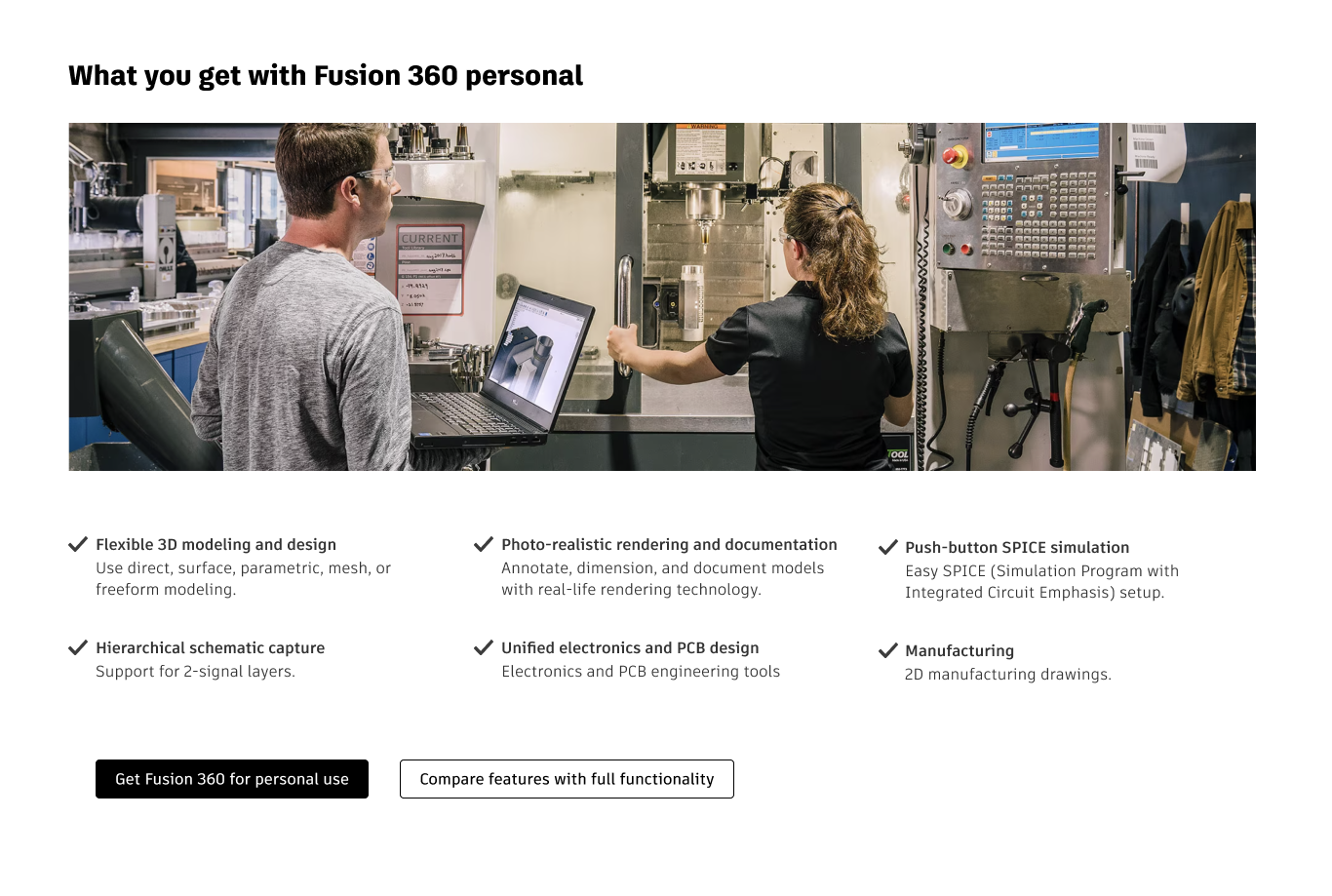
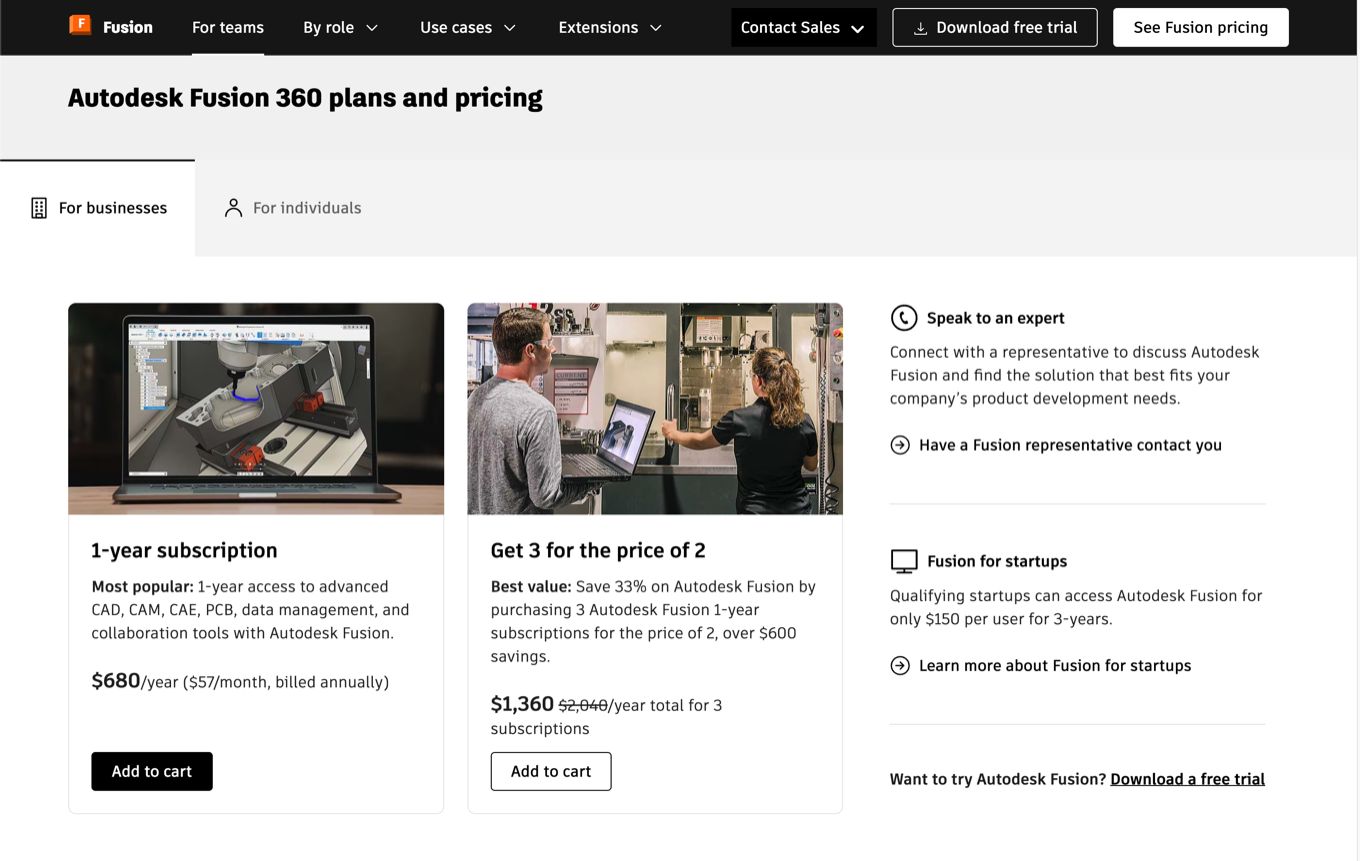
Personal use got its own panel, with what’s included and a link to compare it with the full product. Paid plans sat side by side, with comparisons to legacy products and the collection built in.
PostScript
After the migration, trial starts rose 20% and conversion improved 8%. Requested changes also came back faster.
Fusion later used the comparison pattern to set itself against products from other companies, such as a Fusion vs. SOLIDWORKS page in 2024. That came after I left, and it wasn’t on the agenda while I was there.
This is one story from a longer run of work at Autodesk. The Autodesk page carries the rest.
A product that outgrew its own pages?
Let’s bring it into the system without losing its audience.